
Hull Janitorial Supplies: Open a Trade Account Today
Commercial facilities teams, contract cleaners and public sector estates across East Yorkshire face relentless budget pressure and demanding hygiene standards. Securing reliable Hull janitorial supplies requires more than basic retail access. It demands structured wholesale support, rapid dispatch and consistent compliance verification. Professional operations cannot risk delays, fluctuating prices or substandard stock that fails regulatory inspection. Direct wholesale partnerships ensure uninterrupted access to professional-grade chemicals, dependable machinery and essential consumables.
Shifting your regular supply chain to a dedicated wholesale partner delivers immediate operational advantages. This model maintains the strict hygiene control required across clinical, commercial and industrial facilities. How can your regional cleaning operation reduce procurement costs, cut administrative paperwork and end chronic stock shortages without committing to restrictive supplier volume contracts?
Key Takeaways
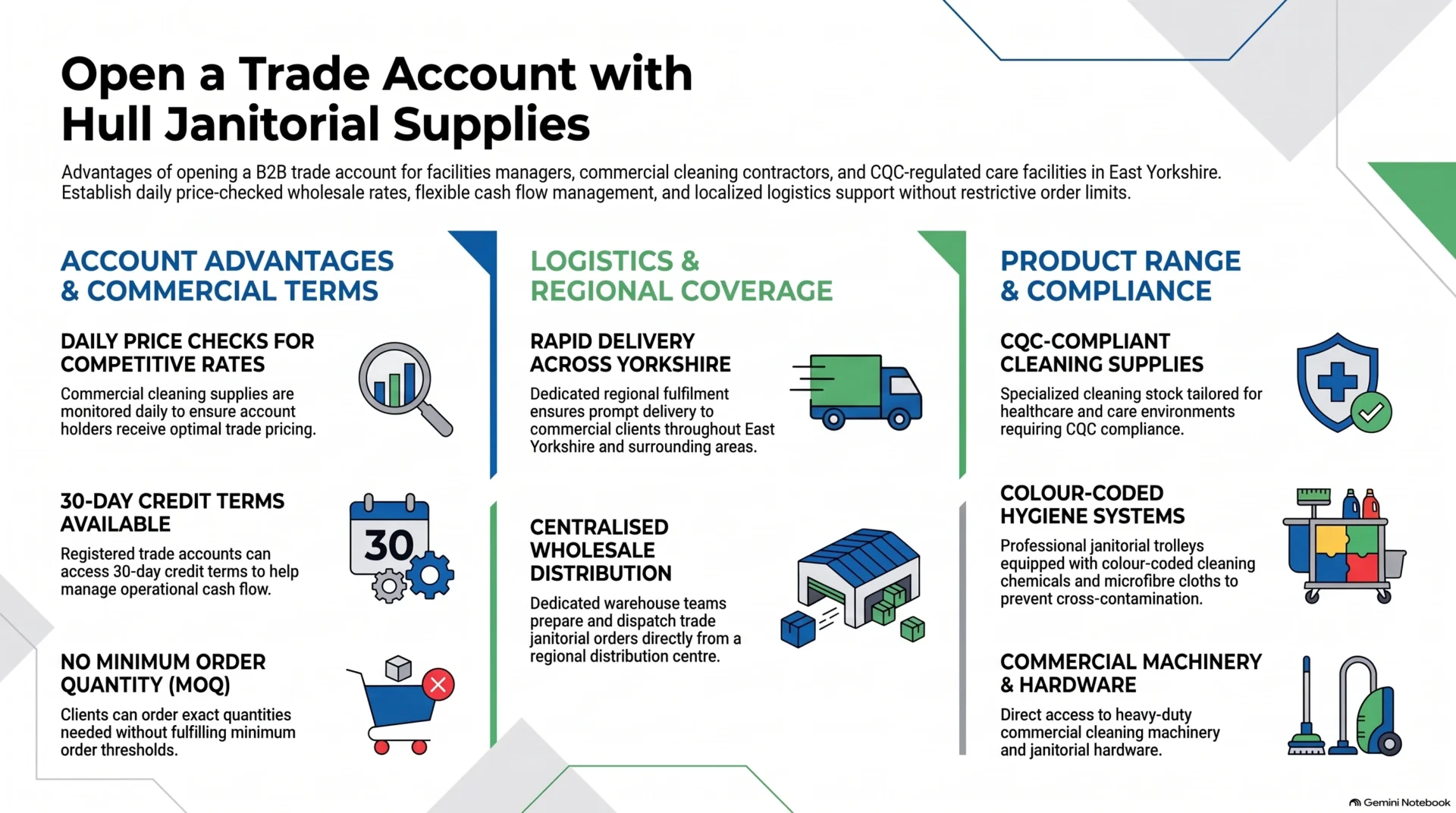
- Opening a formal trade credit facility removes cash-flow bottlenecks and streamlines invoicing for busy commercial contractors operating across the Humber region.
- Daily price benchmarking ensures facilities managers secure verified trade rates without suffering inflated marketplace costs or irregular seasonal distributor price increases.
- Removing minimum order constraints protects independent contractors from holding excess stock without losing access to professional chemical formulations and hardware.
- Flexible machinery acquisition pathways allow organisations to deploy advanced scrubbing technology without exhausting capital reserves needed for primary business operations.
- Infection prevention audits call for documented protocols, including EN 14476 virucidal test data and a consistent colour-coded equipment system across every facility.
Commercial Supply Models for Facilities Teams
Procuring commercial cleaning supplies requires balancing immediate working capital with operational consistency. Contract cleaners and facilities managers frequently debate the merits of casual payment cards versus established wholesale accounts. This comparison highlights how different purchasing routes influence operational efficiency. It also examines invoice management and supply chain reliability across commercial sites.
Credit facilities support operational continuity by enabling single-click procurement without constant credit card authorisations. Consolidating dozens of individual supply receipts into a single monthly invoice reduces administrative friction for finance teams. The table below details key functional differences between casual retail purchasing and structured trade accounts.
| Feature | Cash or Card Purchase | Trade Account Facility |
|---|---|---|
| Payment Terms | Immediate settlement on order | 30 days net monthly credit |
| Order Minimums | Subject to standard basket limits | Zero minimum order quantity |
| Invoicing Structure | Individual transaction receipts | Consolidated monthly statement |
| Technical Support | Generic retail customer service | Dedicated trade support specialist |
| Pricing Discipline | Subject to shelf price changes | Daily price-checked wholesale rates |
Trade Accounts Versus Cash Purchasing
Cashflow Maths for Active Cleaning Contractors
Operating an active contract cleaning business requires strict cashflow management. Managers must balance staff wages and material overheads. A contractor placing eight separate card transactions monthly wastes valuable time reconciling fragmented bank statements. Trade accounts remove card transaction fees. They also delay payment cycles until client revenues clear your bank.
Consolidated 30-day billing allows management to review consumable usage across multiple sites in one clear document. Rather than funding supplies out of pocket, trade terms match supplier outgoings with incoming client payments. This financial buffer allows expanding contractors to accept new cleaning contracts without depleting cash reserves.
Credit Application Standards and Priority Dispatch
Opening an account requires standard business documentation. This includes your Companies House registration number, VAT details and trade references. Processing typically takes 24 to 48 hours. In practice, we find most contractors hold an active account within two working days, without onerous paperwork or lengthy approval queues.
Account holders receive priority over retail buyers. This status ensures fast order picking and protected allocation during regional inventory shortages. When critical lines face supply constraints, warehouse teams reserve stock for trade accounts first. Dedicated telephone lines bypass automated queues. They connect your procurement team directly with experienced staff who understand commercial site demands.
Daily Price-Check Guarantees Against Wholesale Rates
Rigorous Daily Benchmarking Across National Distributors
Securing genuine trade price cleaning supplies demands continuous market surveillance against major UK commercial distributors. Dedicated wholesale pricing teams compare core janitorial lines daily. They verify that listed trade rates match or beat national competitors. This operational discipline removes the inflated margins common among fragmented regional cleaning merchants.
The daily price-check guarantee covers identical professional formulations, certified paper lines and commercial hardware. If a trade customer identifies a lower price on an identical item from a legitimate UK distributor, we match that rate within one business day. This systematic monitoring shields facilities managers from arbitrary price increases hidden inside distributor catalogues.
Marketplace Risks and Consumable Overspending
Trade buyers frequently overpay when sourcing washroom paper, chemical containers and nitrile gloves through casual marketplaces. Cheap online listings regularly disguise diluted chemical solutions and unbranded paper with reduced sheet counts. They also supply thin gloves lacking necessary safety certifications. These inferior products dramatically increase consumption rates on site.
Professional cleaning environments require verified chemical concentrations that work efficiently at prescribed dilution rates. Chemicals supplied without Safety Data Sheets leave employers unable to complete a proper COSHH assessment. Sourcing through verified wholesale channels ensures every consumable arrives with full batch tracking. It also guarantees current safety sheets and genuine manufacturer warranties.
Did You Know?
Under the Late Payment of Commercial Debts (Interest) Act 1998, suppliers can claim statutory interest at 8% above the Bank of England base rate on overdue business invoices. Where no payment date is agreed, a debt becomes overdue 30 days after delivery or receipt of the invoice, whichever is later.
Fulfilment Options and Regional Collection Routes
Fulfilment Modes Across East Yorkshire and Beyond
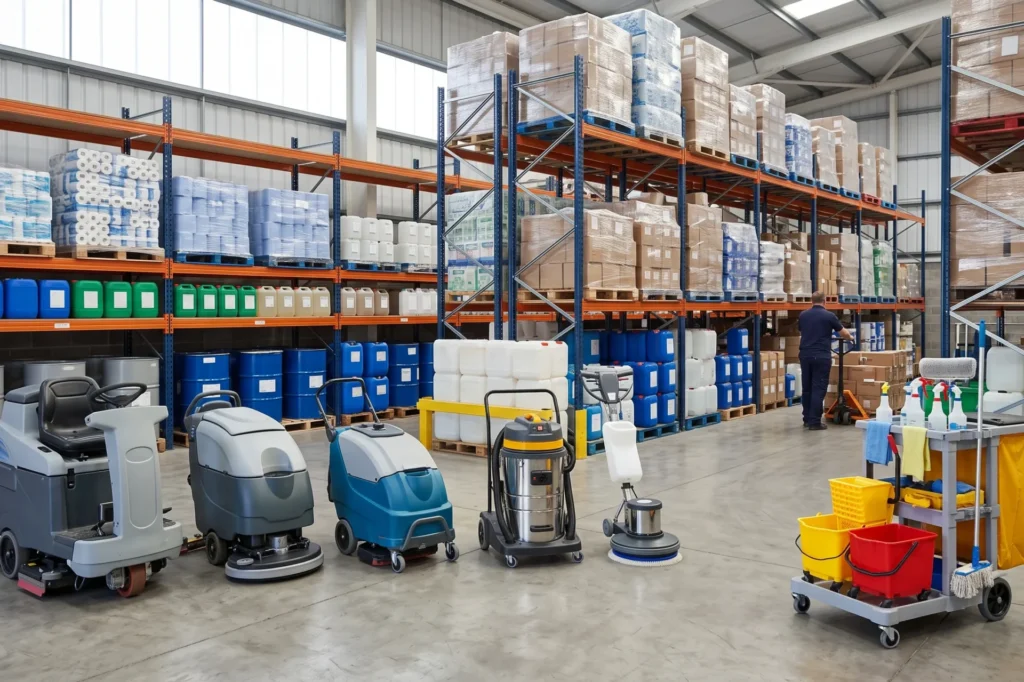
Fulfilling orders across Hull and the surrounding East Riding requires flexible distribution options tailored to cargo volume and urgency. Bulky chemical drums, pallets of paper and floor machines travel efficiently via regular regional delivery routes. Meanwhile, urgent replacement parts and essential personal protective equipment move through overnight courier networks.
Regional distribution routes cover the M62 corridor, Humber basin and East Riding regularly. These routes deliver heavy consignments directly to commercial premises without exorbitant pallet fees. Orders placed before the 2:00 PM cut-off enter immediate picking cycles for next-working-day delivery. This rapid turnaround ensures cleaning teams maintain continuous operation without holding excessive buffer stock.
Warehouse Collection Protocols for Emergency Stock
Trade customers requiring immediate stock access can arrange direct warehouse collection from the central distribution hub in Selby. Pre-booking a collection slot ensures warehouse operatives pull, pack and stage your order before your vehicle arrives on site. This advance staging reduces vehicle turnaround times to under ten minutes.
Drivers must provide an authorised purchase order number and trade identification at the loading bay. For contractors operating across East Yorkshire, coordinating collections prevents downtime during equipment breakdowns or urgent deep cleans. Prior notification allows warehouse personnel to verify chemical batch numbers and prepare hazardous goods documentation correctly.
Trade Accounts
Transform your purchasing with our enterprise-grade procurement tool.
Pay By Monthly Invoice
Zero Minimum Order Quantities for Trade Buyers
Order Thresholds and Small Cleaning Businesses
Many janitorial distributors enforce minimum order values that often run to several hundred pounds, penalising small cleaning businesses and single-site operators. Independent contractors often lack the storage capacity or free capital to purchase full pallets of single-use chemicals. A flexible trade account with no MOQ removes these restrictive commercial barriers entirely.
Operating without order thresholds allows contractors to purchase precisely what an upcoming job requires. This covers everything from a single chemical container to replacement mop heads. Removing minimum spending requirements protects cashflow. It avoids the need to pad orders with unneeded stock simply to cross arbitrary free-delivery thresholds.
Wholesale Unit Pricing Across All Order Scales
Buying single cases or individual items should not force a contractor to pay inflated retail shelf prices for professional supplies. True trade support provides uniform wholesale pricing regardless of whether you order a single box of nitrile gloves or a vanload of paper consumables. This pricing structure protects growing cleaning contractors.
High-volume pallet purchases yield natural freight economies for large contracts. Even so, micro-contractors retain access to professional-strength concentrates at fair commercial rates. This transparent pricing policy allows sole traders and small cleaning agencies across Hull to compete effectively. They can match national cleaning groups on service quality and operational pricing.
Equipment Acquisition
Buy Outright
Full warranty, immediate ownership
Acquire market-leading commercial machinery outright, with full manufacturer warranty and direct delivery from our Selby HQ to site.
Lease Finance
Tax-efficient lease from £24 pcm
Spread the cost over 2, 3 or 5 years with no-deposit leasing on machines over £1,000, plus same-day approval and 7-day UK delivery.
Short-Term Hire
Cover breakdowns and one-off jobs
Hire professional scrubber dryers, carpet extractors and steam cleaners from our Selby HQ for emergency cover or one-off project work.
Machinery Acquisition Strategies for Commercial Sites
Capital Purchase Versus Monthly Lease Finance
Deploying heavy cleaning machinery such as commercial scrubber dryers requires careful financial planning. Purchasing outright suits cash-rich operators maintaining equipment for five or more years, but it ties up valuable liquidity. Equipment leasing spreads asset costs across two to five years, preserving operating capital for commercial expansion.
Operating lease rentals are generally treated as a deductible trading expense. Outright purchases may instead qualify for capital allowances, so the tax position needs checking with an accountant. For example, a commercial scrubber dryer on lease finance costs roughly £110 monthly rather than £5,000 upfront. This structure aligns machine costs with monthly revenue from client contracts.
Short-Term Hire for Project Cleans and Urgent Demands
Short-term machine hire provides an ideal bridge for specialised contracts, post-construction cleans or sudden equipment breakdowns on critical sites. Hiring high-performance equipment removes depreciation risks and long-term storage costs for machines required only occasionally. It also provides a practical trial before committing to long-term lease finance.
Selecting suitable floor equipment depends on site layouts and operational constraints. Healthcare facilities require quiet battery scrubbers that leave floors almost immediately dry. This capability minimises slip hazards in busy corridors. Industrial units and commercial kitchens demand robust, high-torque agitation equipment. Such machines scour ground-in grease from tile grout and uneven concrete floors.
Price-Checked Deals
Stock up on our fast-moving wholesale cleaning products today. We constantly monitor these price-checked deals to lower your commercial overheads..
Infection Control Standards and CQC Compliance
Virucidal Efficacy Under EN 14476 Benchmarks
Healthcare and clinical environments demand sanitising formulations tested to recognised European performance standards. The EN 14476 standard specifies test methods and virucidal requirements for chemical disinfectants used in the medical area. A full virucidal pass demonstrates activity against both enveloped and non-enveloped viruses within documented contact times.
CQC inspectors assess providers against Regulation 12, which covers preventing and controlling the spread of infection. Regulation 15 separately requires clean premises and equipment. The regulations do not name specific test standards. However, documented EN 14476 and EN 1276 data gives facilities managers clear evidence that surface disinfectants suit their intended use.
Colour-Coded Hygiene Systems and Zonal Controls
Cross-contamination is a major route for pathogen transmission within healthcare, catering and educational facilities across the UK. Adopting the British Institute of Cleaning Science colour-coding scheme isolates equipment and chemistry to dedicated physical areas. Staff must never use washroom cleaning kit across catering surfaces or general classroom spaces.
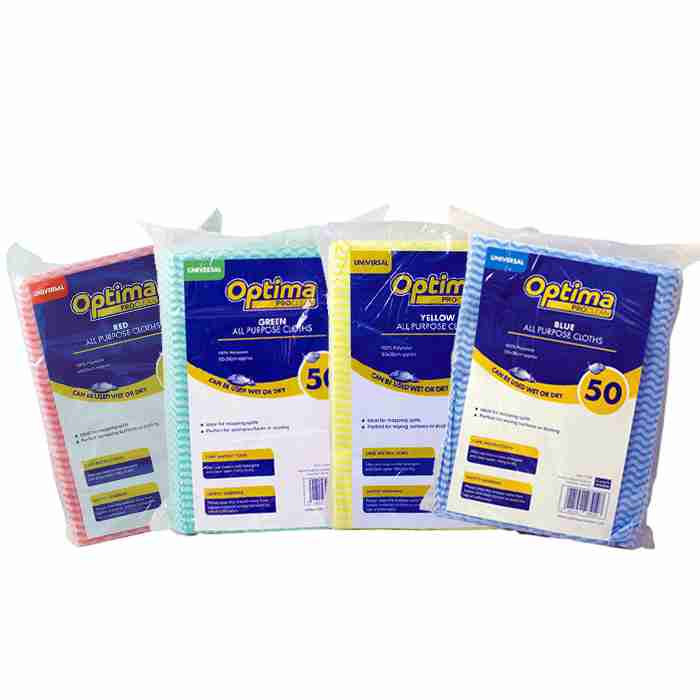
Under the BICSc scheme, red equipment stays confined to toilets, urinals and washroom floors. Yellow covers washbasins and other washroom surfaces, whilst many NHS sites also assign yellow to isolation areas. Blue kit services general low-risk areas such as offices and corridors. Green equipment handles food preparation zones, commercial kitchens and bar areas.
Built for Your Industry
Hygieia provides products and equipment into the three key UK sectors where cleaning standards run highest. Each card links to that sector’s compliance detail, recommended machines, and live case studies.
Facilities Management
Multi-site contractor support nationwide
Single rolling lease contract across all your customer sites. Replace machines as contracts win or lapse – no capital tied up.
Education & Schools
Safe corridors, term-time delivery slots
Quiet, slip-prevention scrubbers for corridors and halls. Term-time delivery slots designed not to disrupt teaching.
Healthcare & NHS
EN 14476 viral compliance for CQC sites
EN 14476-compliant chemistry and machines that meet Regulation 15 of the CQC cleanliness standards across NHS and care sites.
COSHH Data Management and Site Safety Records
Safety Data Sheets and Controlled Dilution Systems
The Control of Substances Hazardous to Health Regulations require employers to assess, control and document chemical exposure risks across their workforce. Facilities managers must keep Safety Data Sheets readily accessible for every chemical stored in janitorial cupboards. HSE inspectors can issue improvement notices where staff handle unlabelled or undocumented concentrates.
Automated dilution dispensers and pre-dosed water-soluble sachets remove dangerous manual pouring during daily preparation. Pre-measured dosing systems prevent staff from over-concentrating chemical solutions. Over-concentration damages floor finishes, leaves sticky residues and wastes budget. Every spray bottle must carry legible safety labels indicating correct dilution ratios and protective requirements.
Common Causes of Cleaning Compliance Failures
Audit failures frequently stem from preventable procedural lapses rather than intentional neglect by frontline cleaning operatives. Common infractions include mixing incompatible chemical formulations, using unlabelled domestic spray bottles and leaving dirty mop heads to dry inside stagnant chemical water. Standardised cleaning procedures prevent these persistent on-site compliance breaches.
Pre-labelled spray bottles and sealed sachet packs simplify daily onboarding. They also remove guesswork during shift changes. Regular toolbox talks on chemical contact times help cleaning teams meet legal standards. Professional suppliers provide comprehensive documentation packs. These resources simplify site-level compliance audits across commercial, healthcare and educational facilities.
Get a Trade Quote
Final Thoughts
Maintaining commercial hygiene standards demands reliable access to high-grade chemicals, durable hardware and dependable Hull janitorial supplies. Shifting from casual cash transactions to a dedicated trade account provides commercial facilities with financial flexibility and priority fulfilment. These benefits allow contract cleaners and facilities managers to focus on delivering clean premises rather than managing supply bottlenecks.
Modern cleaning operations need supply partners that provide clear technical guidance, verified EN test data and flexible acquisition pathways. Aligning your procurement strategy with experienced trade specialists supports regulatory compliance. It also protects operational efficiency and financial control across all commercial sites.
Frequently Asked Questions
Q: What documentation is required to open a janitorial trade account?
A: Opening a professional trade credit facility requires standard business details. These include your registered company name, Companies House number and VAT registration details if applicable. We also request contact information for two established trade references. You must also provide the signature of a company director or authorised procurement officer. Most standard trade applications complete review and verification within 24 to 48 hours. This process enables rapid access to 30-day net payment terms without unnecessary administrative delay.
Q: How does a trade account help cleaning contractors manage working capital?
A: Trade credit accounts provide 30-day net payment terms for cleaning contractors. This structure allows teams to purchase essential consumables and complete client work before settling invoices. Consolidating fragmented card purchases into a single monthly VAT statement streamlines accounting. It also significantly lowers administrative overheads. This payment gap prevents contractors from exhausting cash reserves before client invoices clear. Consequently, businesses retain the capital stability needed to bid on larger facilities contracts.
Q: What does the EN 14476 standard mean for commercial disinfectants?
A: EN 14476 is a European standard that tests the virucidal performance of chemical disinfectants intended for the medical area. This includes hospitals, clinics and care settings. Products that pass undergo laboratory testing showing at least a 99.99% reduction in the test viruses within a stated contact time. CQC inspectors expect care providers to show effective infection control. EN 14476 test data is a common way to demonstrate that surface disinfectants are fit for that purpose.
Q: Why should facilities avoid buying commercial cleaning supplies from general online retail marketplaces?
A: Online marketplaces regularly host unverified sellers. These traders sometimes supply expired, repackaged or heavily diluted chemical products that fail professional standards. Such goods can arrive without Safety Data Sheets, batch traceability or the hazard labelling required under GB CLP rules. Without that information, employers cannot complete a proper COSHH assessment. In contrast, verified wholesale distributors supply authentic formulations. They provide full compliance documentation, maintain consistent pricing and offer direct technical support for commercial applications.
Q: What are the main benefits of choosing equipment leasing over outright machine purchase?
A: Equipment leasing allows facilities teams to deploy advanced cleaning machinery, such as industrial scrubber dryers, without spending upfront capital. Fixed monthly payments make budgeting predictable. Lease rentals are generally deductible as a trading expense, whilst an outright purchase may instead qualify for capital allowances such as the Annual Investment Allowance. Your accountant should confirm which route suits your tax position. Leasing also preserves reserves for operational emergencies and simplifies upgrading to newer models at the end of the term.