Glass Cleaner Sachets: Streak Free, Ammonia Free
Commercial glazing needs chemistry that lifts atmospheric grime, finger marks and greasy films. It must do so without leaving cloudy smears. Traditional liquid triggers add weight to delivery pallets and swallow storeroom space. Commercial glass cleaner sachets remove that burden. Concentrated powder pods dissolve inside reusable trigger bottles. Operatives then work to an exact dilution across mirrors, partition glazing and external panes.
Can a commercial operation strip out single-use plastic and hazardous decanting whilst still achieving flawless optical clarity? Formulation chemistry, material compatibility and wipe technique all shape the answer. Each factor is measurable, and each one is controllable on site. So how does water-soluble dosing change the daily economics and safety profile of professional window and mirror care?
Key Takeaways
- Each ten-sachet pack of SoluCLEAN glass cleaner yields 7.5 litres of working solution, costing seventy pence per 750ml trigger bottle.
- The formulation contains no ammonia, alcohol or added fragrance, making it suitable for food preparation counters, healthcare settings and washrooms.
- Concentrated powder in the sachet is classified hazardous, yet the diluted working solution is Not Classified under CLP regulations.
- Colour coded blue for general areas, the solution dries rapidly on glass, mirrors, stainless steel and architectural aluminium.
- Solupak manufactures the pods in Castleford, West Yorkshire, using compostable outer packaging that eliminates single-use plastic from cleaning contracts.
Technical Specifications and Yield Economics
SoluCLEAN Glass Cleaner sachets carry the product code SCWS750GSP-10. Each pack holds ten sachets. Tap water becomes a professional surface treatment for commercial glazing, retail counters and metal fixtures. One pack yields 7.5 litres of working solution at seventy pence per 750ml bottle. This format removes manual handling risk and the storage demands of ready-to-use liquids.
In use, the chemistry sits between pH 7 and pH 9. That buffered range lifts finger marks and oily grime without etching sensitive substrates. No ammonia, solvents or perfumes are present. The liquid evaporates cleanly from non-porous surfaces. The table below sets out the performance metrics, safety thresholds and dilution properties governing this surface care system.
| Parameter | Technical Specification | Practical Benefit |
|---|---|---|
| ParameterProduct Code and Format | Technical SpecificationSCWS750GSP-10 (10 Sachets) | Practical BenefitCompact pack replacing ten rigid trigger bottles |
| ParameterWorking Solution Yield | Technical Specification750ml per sachet (7.5L per pack) | Practical BenefitProvides 7.5 litres of ready-to-use glass cleaner |
| ParameterIn-Use pH Level | Technical SpecificationpH 7 to 9 (buffered neutral to mild alkali) | Practical BenefitProtects uPVC, anodised aluminium and glass |
| ParameterFormulation Profile | Technical SpecificationFree from ammonia, alcohol and fragrance | Practical BenefitNon-tainting and suitable for sensitive healthcare areas |
| ParameterRegulatory Classification | Technical SpecificationWorking solution Not Classified under CLP | Practical BenefitNo hazardous chemical exposure during daily use |
| ParameterColour Coding Standard | Technical SpecificationBlue code (general and low-risk areas) | Practical BenefitPre-printed bottles prevent cross-contamination errors |
| ParameterPack Price and Economics | Technical Specification£6.95 per pack (70p per 750ml refill) | Practical Benefit93p per working litre against £2.67 RTU triggers |
Surface Chemistry and Evaporation Properties
Ammonia and Solvent Removal Benefits
Removing ammonia and volatile alcohol solvents prevents hazardous vapour building up in enclosed commercial spaces. Standard solvent cleaners flash off fast. They also leave evaporative surfactant rings and release pungent fumes. Stripping out those aggressive carriers creates a streak free glass cleaner that dries cleanly, with no noxious odour during daytime work.
Older janitorial formulas leaned on ammonia to cut greasy smears. That approach carries real operational liabilities. Ammonia strips protective coatings from modern window films. It irritates the respiratory tract in confined washrooms. It also degrades rubber glazing seals. Water-soluble sachets instead use specialised wetting agents. These suspend grease without solvents, so panes dry free of chemical haze.
Mild Alkaline pH Balance and Substrates
At working dilution the solution holds a pH between 7 and 9. That balance cleans effectively across sensitive architectural materials. Strongly acidic or caustic chemicals carry obvious risks. They etch glass, degrade anodised aluminium mullions and dull uPVC frames. A buffered formula dissolves light grease and organic oils without attacking surrounding trim.
This stability matters in modern interiors with mixed finishes. In practice, operatives move between glass entrance doors, stainless steel lift fascias and painted sills within minutes. A surface-safe formula prevents accidental damage to expensive metalwork. It also keeps cleanliness uniform across internal facades. One trigger bottle then covers the whole elevation rather than three.
Cost Control and Dilution Economics
Measured Cost per Working Litre
Glass cleaner sachets cut chemical spend by removing the transport and packaging cost of premixed water. A pack of ten sachets costs £6.95. Each 750ml trigger bottle therefore costs exactly seventy pence to fill. The headline yield is 7.5 litres per pack. That equates to 93p per working litre.
Set those figures against ready-to-use retail triggers and the gap is stark. A comparable RTU spray costs £2.67 per 750ml unit, based on £15.99 for six bottles. Standardising on water-soluble sachets cuts unit chemical costs by nearly three-quarters. From experience across the sector, knowing the true cost per litre is what allows contractors to bid competitively and still protect margin.
Elimination of Chemical Overdosing Waste
Pre-measured dosing removes the waste and sticky residues caused by pouring concentrate by eye. In commercial cleaning, unsupervised decanting routinely leads to heavy over-concentration. The Solupak method statement is clear on this point. Only a small amount of product is needed to clean glass properly. Controlled dosing therefore prevents surface smearing.
When operatives mix liquid cleaners too strong, surplus surfactant stays on the glass. The water evaporates and the chemical film remains. That film attracts airborne dust and fingerprints. Surfaces then look soiled within hours of being cleaned. Sachets enforce correct dilution every time. One pod per 750ml bottle delivers consistent clarity and predictable chemical consumption.
Did You Know?
HSE publication EH40/2005, which carries the approved workplace exposure limits used with COSHH 2002, sets a long-term limit for anhydrous ammonia of 25 ppm (18 mg/m³) over an eight-hour reference period. The 15-minute short-term limit is 35 ppm (25 mg/m³). Ammonia-free formulations remove that exposure route from the cleaning cupboard entirely.
Packaging Lifecycle and Carbon Reduction
Dissolving Pods and Compostable Wrappers
The sachet film is fully water-soluble. It dissolves within roughly thirty seconds of agitation in warm or cold water. Secondary packaging is compostable, which avoids conventional multi-layer plastics that cannot be recycled. Operatives peel the adhesive paper barcode label into general waste. They then compost the flexible packet and recycle the card box.
This design supports corporate zero-landfill targets. It also reduces Extended Producer Responsibility liabilities, which are charged on packaging placed on the market. Ready-to-use spray bottles generate large volumes of rigid plastic waste. That waste needs collecting and transporting. A reusable Bottle for Life system, moulded from 100% recycled UK milk containers, removes single-use trigger disposal across an estate.
Yorkshire Manufacturing and Freight Reduction
Solupak manufactures the SoluCLEAN range in Castleford, West Yorkshire. The plant sits roughly twelve miles from the central distribution warehouse in Selby. Wholesale stock is collected directly from the factory by company vehicles. That removes third-party freight legs. Moving lightweight dry sachets instead of bottled liquid cuts freight carbon emissions by around ninety percent.
This compact logistics footprint gives cleaning operations practical resilience. Contractors working across Castleford and the wider region benefit from short, verified supply routes. Shorter routes reduce Scope 3 transport footprints, which now appear in tender questionnaires. One pallet of concentrated sachets replaces thirty pallets of diluted cleaner. Storage space in tight janitorial cupboards is freed accordingly.
60 Litre Free Trial
Request your free 60 litre sample of Heavy Duty Scrubber Dryer Solution
Claim Your Free Samples
Safety Compliance and Exposure Control
CLP Classification Shift upon Dilution
The neat powder inside each sachet carries a hazardous classification under CLP regulations. That classification ensures proper industrial handling upstream. The powder is encapsulated in dissolving film, so workers never touch concentrate. Once mixed into 750ml of water, the working solution is Not Classified under CLP. Daily use is therefore intrinsically low risk.
That shift simplifies COSHH management considerably. Bulk chemical drums present recurring splash hazards during decanting and pouring. Keeping dry actives sealed inside dissolvable polyvinyl alcohol pouches removes the risk of chemical burns. It also removes inhalation exposure at the point of mixing. Safety data sheets remain available for every formulation on trade account setup.
Colour Coding and Auditing Standards
SoluCLEAN Glass Cleaner carries a blue colour code. That code governs use across general, low-risk and public areas. Pre-printed, colour-coded trigger bottles align with national commercial colour-coding conventions. Auditors and facilities inspectors can verify chemical contents and dilution compliance on sight. No handwritten labels or decanting logs are needed.
Unmarked or illegible spray containers remain a common audit failure. In practice, they are among the first things an inspector photographs. The dedicated Bottle for Life units display clear safety guidance, product designations and blue zone markings. For providers managing education and commercial accounts across Wakefield and similar districts, compliant visual standards prevent cross-contamination between departmental teams.
Trade Accounts
Transform your purchasing with our enterprise-grade procurement tool.
Pay By Monthly Invoice
Sensitive Settings and Food Area Compatibility
Hygiene in Commercial Food Preparation
An ammonia free glass cleaner for food areas keeps display cabinets and sneeze screens clean without tainting food. Fragranced chemicals and ammonia vapours contaminate exposed ingredients easily. Complaints and regulatory findings follow. A neutral, unperfumed formulation lets catering teams polish protective glass screens safely, even during service hours.
In food preparation settings, degreasing tasks must stay separate from presentation wiping. Heavy cookline soils need a dedicated catering degreaser. Daily grease splatters on glass doors and refrigeration counters need a residue-free finish instead. Formulations free from synthetic perfume protect sensory product integrity. That matters in retail bakeries, delis and restaurant kitchens where product aroma sells.
Clinical and Patient Care Standards
Healthcare environments need cleaning agents that limit respiratory irritation. Patients, residents and clinical staff are all affected by airborne chemistry. Unscented, alcohol-free glass cleaner sachets prevent the release of sharp vapours that trigger asthma or chemical sensitivities. Inspection mirrors, glazed observation panels and reception partitions still reach full clarity.
In primary care settings and care homes, cleaning regimes must respect strict environmental controls. Cleaning methods and infection control protocols are set by the infection prevention lead for each site. A non-classified, fragrance-free glazing solution supports clinical presentation standards. It also avoids adding unnecessary volatile organic compounds to enclosed residential or consulting rooms.
Equipment Acquisition
Buy Outright
Full warranty, immediate ownership
Acquire market-leading commercial machinery outright, with full manufacturer warranty and direct delivery from our Selby HQ to site.
Lease Finance
Tax-efficient lease from £24 pcm
Spread the cost over 2, 3 or 5 years with no-deposit leasing on machines over £1,000, plus same-day approval and 7-day UK delivery.
Short-Term Hire
Cover breakdowns and one-off jobs
Hire professional scrubber dryers, carpet extractors and steam cleaners from our Selby HQ for emergency cover or one-off project work.
Application Methods for Glazing and Metals
Flat-Weave Microfibre and Fluid Control
A true streak-free finish on high-spec glazing needs the right cloth as well as the right chemical. Flat-weave microfibre is the correct choice. Standard looped pile cloths hold lint and excess fluid. They spread moisture across the pane rather than lifting it. A minimal mist of diluted cleaner flashes off without drag.
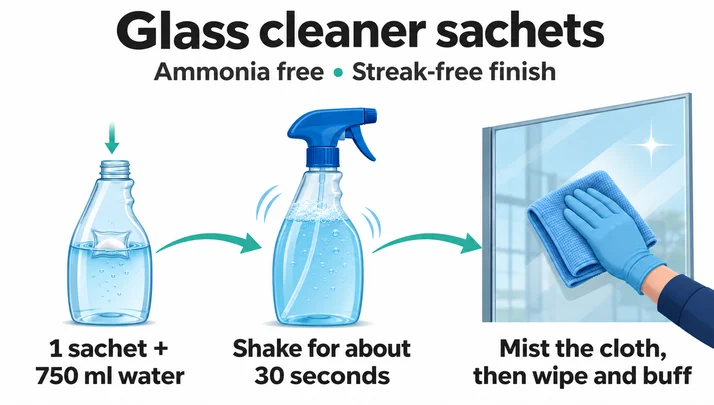
The method statement is specific: only a small amount of liquid achieves streak free results. Operatives should fold a clean microfibre cloth into four quadrants. Product goes onto the cloth, not onto the pane. One side works the surface to suspend greasy deposits. The dry reverse quadrant then buffs the glass to clarity.
Architectural Metal and Composite Surfaces
Commercial building cleaning extends well beyond flat glazing. Brushed stainless steel, uPVC and powder-coated aluminium frames all sit alongside the glass. SoluCLEAN Glass Cleaner lifts greasy finger marks and light soot from metal trims. Anodised surfaces are not dulled in the process. Cleaning along the grain keeps sheen uniform across busy entranceways.
High-traffic corporate lobbies in cities such as Salford feature extensive structural glass with brushed steel fixings and lift surrounds. Using several aggressive cleaners across adjacent materials risks staining metalwork or etching glass edges. A neutral-to-mildly alkaline formula avoids that outcome. Staff can process mixed-material entryways with one safe trigger bottle.
Built for Your Industry
Hygieia provides products and equipment into the three key UK sectors where cleaning standards run highest. Each card links to that sector’s compliance detail, recommended machines, and live case studies.
Facilities Management
Multi-site contractor support nationwide
Single rolling lease contract across all your customer sites. Replace machines as contracts win or lapse – no capital tied up.
Education & Schools
Safe corridors, term-time delivery slots
Quiet, slip-prevention scrubbers for corridors and halls. Term-time delivery slots designed not to disrupt teaching.
Healthcare & NHS
EN 14476 viral compliance for CQC sites
EN 14476-compliant chemistry and machines that meet Regulation 15 of the CQC cleanliness standards across NHS and care sites.
Commercial Procurement and Multi-Site Supply
Wholesale Trade Account Benefits
A trade account gives commercial contractors and estate managers direct access to trade pricing. There is no friction in the process. The account is free to open. There are no subscription fees, no minimum order values and no qualifying spend. Nothing is paid at the point of ordering on any line.
Procurement teams consolidate multiple operating locations onto a single monthly invoice. That invoice goes to one nominated contact. Managers running single facilities or large regional estates can order exact pack quantities. No minimum order penalty applies. The Price-Checked range behind that account has been curated over thirty-five years of industry trading.
Dispatch Schedules and Regional Fulfilment
Central warehouse stock of surface care sachets and equipment is held in Selby. Orders placed before 2pm dispatch the same day. Delivery completes within two to three working days, Saturdays included. Consignments can be directed to offices, compounds or live sites. Regional contractors therefore plan replenishment around known lead times.
Reliable dispatch lets commercial operators hold continuous inventory without tying up capital in surplus stock. Bulky RTU triggers force the opposite behaviour. Standardising on pre-dosed cleaning technology removes storage friction. It also delivers verifiable environmental and financial savings that stand up in a tender submission or a sustainability report.
Get a Trade Quote
Final Thoughts
Moving commercial facilities from ready-to-use liquid triggers to glass cleaner sachets establishes real control over three things: consumable spend, operative safety and environmental impact. Pre-measured dissolvable powder locks dosing in place. Inconsistent dilution disappears, and so does the chemical waste that causes surface smearing. A 7.5-litre pack yield at seventy pence per 750ml refill outperforms bulk liquid concentrate on both economic and operational measures.
Statutory waste requirements continue to tighten. Corporate sustainability standards now demand measurable carbon reduction across service contracts. Concentrated cleaning systems answer both without operational compromise. Water-soluble formulations free from ammonia, alcohol and synthetic perfume hold presentation standards high across retail, commercial and healthcare estates. Aligning daily dosing with closed-loop reusable hardware strips unnecessary freight and single-use packaging out of the supply chain for good.
Frequently Asked Questions
Q: How does a glass cleaner sachet work?
A: Fill a clean 750ml trigger bottle with water. Drop in one SoluCLEAN glass cleaner sachet. Refit the trigger head and shake for about thirty seconds. The film dissolves completely in that time. The water-soluble pouch breaks down without leaving sediment, releasing concentrated active cleaning agents into solution. Operatives can then spray the mixed liquid straight onto a microfibre cloth. It is ready for windows, mirrors, stainless steel and composite trim.
Q: Is the working solution safe for cleaning staff to handle?
A: Yes. The neat powder inside an unopened sachet does carry hazardous classifications under CLP regulations. It stays sealed inside dissolvable polyvinyl film throughout handling. Once dissolved into 750ml of water, the working solution is Not Classified under CLP. Operatives never make direct physical contact with concentrated chemicals. That removes the splash and vapour exposure risks associated with decanting bulk liquid drums by hand, and it simplifies the site COSHH assessment.
Q: Why is this glass cleaner suitable for food preparation areas?
A: SoluCLEAN Glass Cleaner contains no ammonia, alcohol or added fragrance. That makes it non-tainting and appropriate for food-contact environments. In commercial catering, bakeries and hospitality venues, perfumed chemicals or harsh solvent vapours can contaminate exposed foodstuffs. They can also taint preparation surfaces. This neutral-to-mildly alkaline formula cleans display cabinets, glass sneeze guards and stainless steel serveries. It leaves no residue and produces no unpleasant airborne chemical fumes during service.
Q: What is the true yield and cost per bottle?
A: A single pack contains ten sachets and costs £6.95. It yields 7.5 litres of working solution. Each 750ml trigger bottle refill therefore costs exactly seventy pence. That equates to 93p per working litre. The 30-sachet bundle at £19.95 reduces the cost to 67p per bottle. It also includes a reusable Bottle for Life. A traditional ready-to-use liquid trigger costs £2.67 by comparison.
Q: How do I dispose of the sachet packaging responsibly?
A: Peel the adhesive paper barcode label from the outer pouch first. That label goes into standard general waste. The flexible pouch material itself is fully compostable. It can be processed in commercial composting streams. The cardboard outer box is widely recyclable and belongs in dry mixed paper recycling. Following those three steps means no single-use plastic from the pack enters landfill, which supports site zero-landfill reporting.