
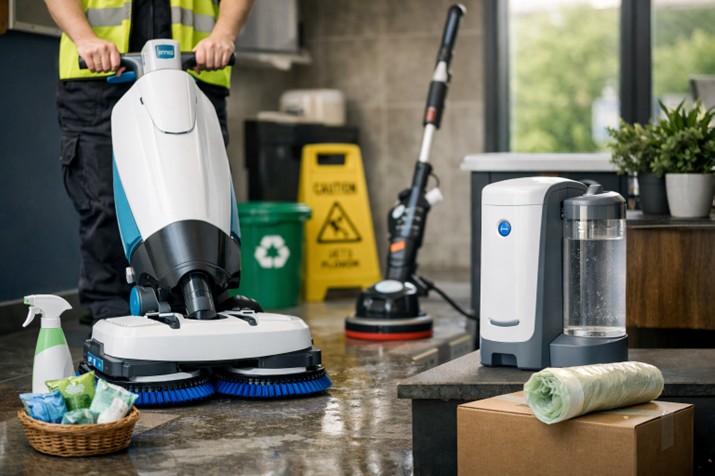
Sustainable Technology and Cleaning Innovation.
The UK commercial sector is currently undergoing a rapid transformation as high-performance sustainable technology replaces outdated, chemical-heavy cleaning methods. For modern SMEs, the shift toward eco-logical systems and cleaning innovation is no longer a matter of corporate social responsibility alone, but a fundamental strategy for operational survival. Can your business afford to ignore the 60% cost savings offered by the next generation of hygiene hardware?
Traditional cleaning often relies on water-heavy transport and single-use plastics, creating unnecessary overheads and environmental strain. Modern solutions address these inefficiencies by prioritising concentrated chemistry, high-torque machinery, and rigorous waste management standards. Is your facility ready to adopt the tools that define a cleaner, safer, and more profitable future?
Key Takeaways
- Sustainable systems can reduce chemical expenditure by 60% through concentrated dosing.
- Modern floor care machinery like the i-mop cleans 75% faster than traditional mopping.
- Water-soluble sachets reduce transport-related carbon emissions by up to 90%.
- Compliance with 2026 “Simpler Recycling” reforms is now a legal necessity for UK firms.
- Leasing models allow businesses to access 2026 technology without significant capital outlay.
Drive Operational Savings Through Eco-Logic
Reduce Costs Using Concentrated Chemistry
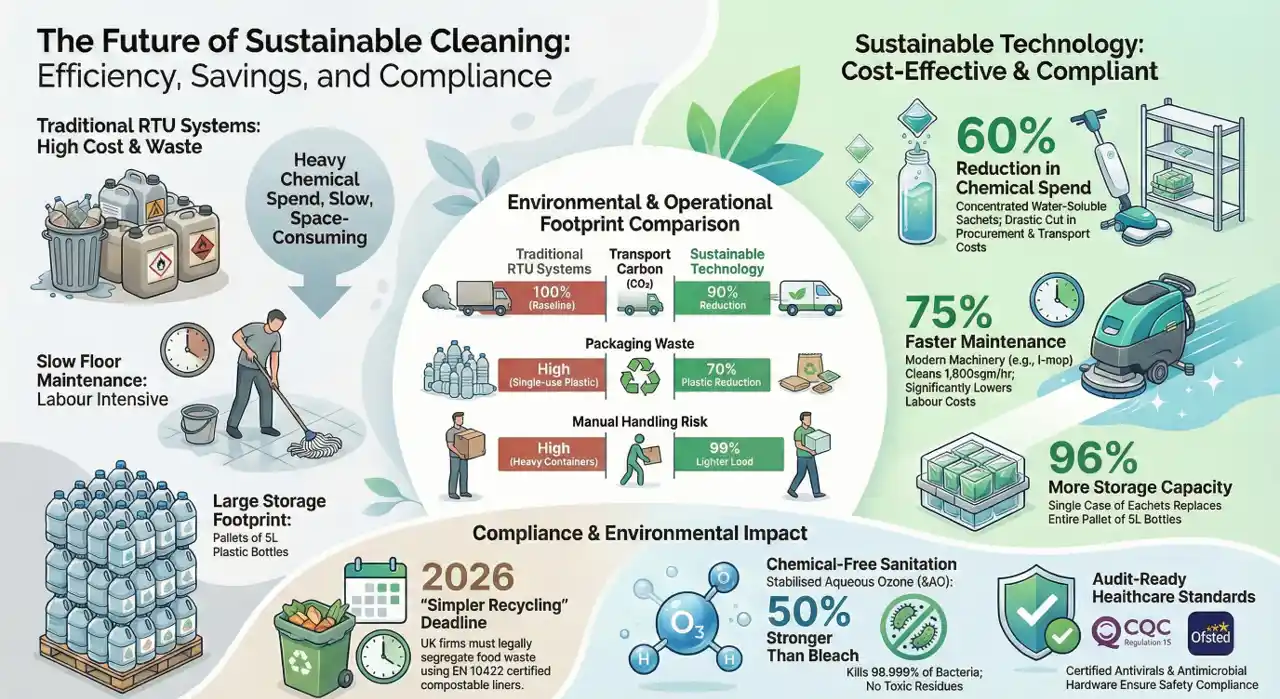
Sustainable technology delivers measurable commercial benefits by reducing the volume of waste and labour required for professional maintenance. By transitioning from traditional ready-to-use liquids to concentrated, water-soluble systems, businesses can reduce chemical spend by up to 60%. This shift ensures that high hygiene standards are maintained without inflating operational costs or storage requirements. The Hygieia Group advocates for the SoluCLEAN logic, which replaces bulky 5L containers with lightweight sachets. This system provides 96% more storage space, as a single case of sachets replaces an entire pallet of traditional bottles. By eliminating “glug-dosing,” staff ensure that the optimal amount of product is used every time, preventing waste and ensuring surface safety across the facility.Extend Equipment Lifespan with High-Performance Hardware
Professional-grade machinery is engineered for durability, often lasting over a decade in demanding environments like hospitals and hotels. This longevity is a core component of sustainable procurement, as it reduces the frequency of equipment replacement and the associated environmental impact. Investing in German-engineered systems, such as SEBO vacuums, ensures that high filtration standards and mechanical reliability are maintained long-term. These machines are designed with modular components, meaning parts can be replaced individually rather than disposing of the entire unit. This approach aligns with the “Efficiency Equals Savings” logic, where high-quality equipment reduces downtime and minimises breakdowns. By choosing hardware with a proven track record, businesses protect their bottom line while adhering to high environmental standards.| Metric | Traditional RTU Systems | SoluCLEAN Sustainable Technology |
|---|---|---|
| Chemical Spend Reduction | 0% (Baseline) | Up to 60% Savings |
| Storage Efficiency | Standard Pallet Space | 96% More Space Saved |
| Packaging Waste | High (Single-use 5L/750ml) | 70% Plastic Reduction |
| Transport Carbon (CO2) | 100% (Shipping Water) | 90% Reduction |
Implement Chemical-Free Sanitisation Technology
Deploy Stabilised Aqueous Ozone Systems
Chemical-free cleaning innovation is transforming how UK facilities approach infection control and surface hygiene. Stabilised Aqueous Ozone, produced by systems like Tersano iClean, converts tap water into a powerful sanitiser that is 50% stronger than bleach yet leaves no toxic residue. This technology eliminates 99.999% of bacteria on contact, making it ideal for food preparation areas, healthcare facilities, and childcare settings.
SAO is generated on-demand, meaning there is no need to store hazardous chemicals on-site, reducing both safety risks and storage costs. The solution reverts to plain water within 24 hours, ensuring that no harmful chemical build-up occurs on treated surfaces. This approach satisfies both environmental objectives and the stringent hygiene standards required by regulatory bodies like the CQC and OFSTED.
Apply Active Microbe Technology for Ongoing Protection
Active Microbial Technology uses beneficial bacteria to break down organic waste at the microscopic level, providing continuous cleaning action long after application. Products like Pro-Bac sanitiser maintain their effectiveness for up to seven days, constantly digesting biofilms and odour-causing matter. This innovation is particularly valuable in washrooms, where traditional disinfectants only provide temporary surface sanitation.
The microbes used in these formulations are non-pathogenic and safe for human contact, making them suitable for use in high-traffic public spaces. By preventing the build-up of organic residue, Active Microbe Technology reduces the frequency of deep cleans and the associated labour costs. This proactive approach to hygiene represents a significant step forward in cleaning innovation.
Navigate Waste Management and Legislative Compliance
Prepare for the 2026 Waste Reforms
The UK waste landscape is changing due to the “Simpler Recycling” reforms, which mandate the segregation of dry recyclables and food waste for most businesses. Sustainable technology plays a vital role here, providing the hardware and liners needed to comply with these legal obligations. By 2026, digital waste tracking will become mandatory, replacing paper-based documentation with real-time recording of waste movements.
Failure to implement correct segregation can lead to significant financial penalties and operational disruptions. Cleaning contractors must now provide evidence-based waste management strategies for their clients, focusing on circular economy goals. Integrating CHSA-accredited recycled refuse sacks and compostable liners ensures that businesses remain on the right side of the law while meeting corporate social responsibility targets.
Meet Extended Producer Responsibility Requirements
Producers of packaging waste now face greater financial responsibility through Extended Producer Responsibility fees, making waste reduction a commercial necessity. Every business has a legal “Duty of Care” to ensure their waste is handled and disposed of correctly by licensed carriers. This includes the separation and correct labelling of hazardous materials like solvents and certain concentrated disinfectants.
Sustainable technology, such as the SoluCLEAN system, helps reduce the volume of packaging waste produced on-site, directly lowering EPR-related concerns. By maintaining Waste Transfer Notes for at least three years, facility managers can satisfy local authority inspections. Prioritising waste mitigation today prepares businesses for the even stricter reporting standards expected by 2026.
Special Offer
20% Discount on all SoluCLEAN Products
use ECO20 at checkout
Maintain Sector-Specific Hygiene Controls
Achieve CQC Compliance in Healthcare
In healthcare environments, sustainable technology must align with CQC Regulation 15, which requires premises and equipment to be clean and properly maintained. Using EN 14476 certified antivirals, such as SoluCLEAN Anti-Viral Cleaner, provides the evidence-based protection needed to control infection. This 2-in-1 solution cleans and sanitises in a single step, meeting clinical standards for pathogen elimination.
High-touch disinfection is a priority in clinical areas, where touchpoints like bedrails and call bells require frequent attention. Tools such as P-WAVE antibacterial door handles provide 24/7 proactive protection against MRSA and E. coli. These evidence-based tools allow healthcare providers to maintain an “audit-ready” environment that satisfies both infection control teams and regulatory bodies.
Meet Hygiene Standards in Education
For the education sector, cleaning innovation is focused on reducing pupil absence and meeting OFSTED expectations for a safe learning environment. Zonal colour-coding, supported by the SoluCLEAN “Bottle for Life” system, prevents cross-contamination between washrooms and classrooms. This clear visual system ensures staff compliance without the need for intensive technical training.
High-traffic floor areas, such as corridors and school halls, require rapid drying times to prevent slip hazards during lesson changes. The i-mop Lite is particularly effective in these congested spaces, cleaning right to the edge and under fixtures where larger machines fail. Ensuring floors are instantly dry helps schools maintain “Outstanding” safety ratings while protecting the wellbeing of pupils and staff.
Optimise Strategic Investment and Capital Protection
Leverage Tax-Efficient Leasing Models
Accessing the latest sustainable technology does not require a significant upfront capital expenditure if businesses utilise flexible acquisition models like leasing. Fixed monthly payments allow contractors to use 2026 machinery while preserving their working capital for other operational needs. In the UK, lease payments are typically 100% tax-deductible, providing an immediate fiscal advantage over outright purchase.
Leasing also protects businesses against technology obsolescence, as it allows for seamless upgrades to newer models at the end of the term. This ensures that facilities managers always have access to the most efficient tools available, maintaining a competitive edge. With same-day approval often possible, businesses can react quickly to new contract opportunities without exhausting their cash reserves.
Maximise ROI Through Equipment Demonstrations
Understanding the return on investment for high-end machinery is essential before committing to a purchase or lease. The Hygieia Group provides hands-on demonstrations at their Selby showroom or virtual appointments for national clients. Testing equipment like the i-mop or MotorScrubber on-site allows decision-makers to see the tangible labour savings and performance improvements in their own environment.
For larger facilities, on-site demonstrations provide a real-world performance test that justifies the investment to procurement boards. These consultations help identify the exact hardware configuration needed to address specific cleaning challenges. By seeing the “Efficiency Equals Savings” logic in action, businesses can move forward with confidence in their sustainable transition.
Own Professional Cleaning Equipment
Own the very latest professional cleaning equipment, with no deposit down, same day approval, payment plans over 2, 3 or 5 years and delivery within 7 days. Leasing finance is available on all machines over £1,000.
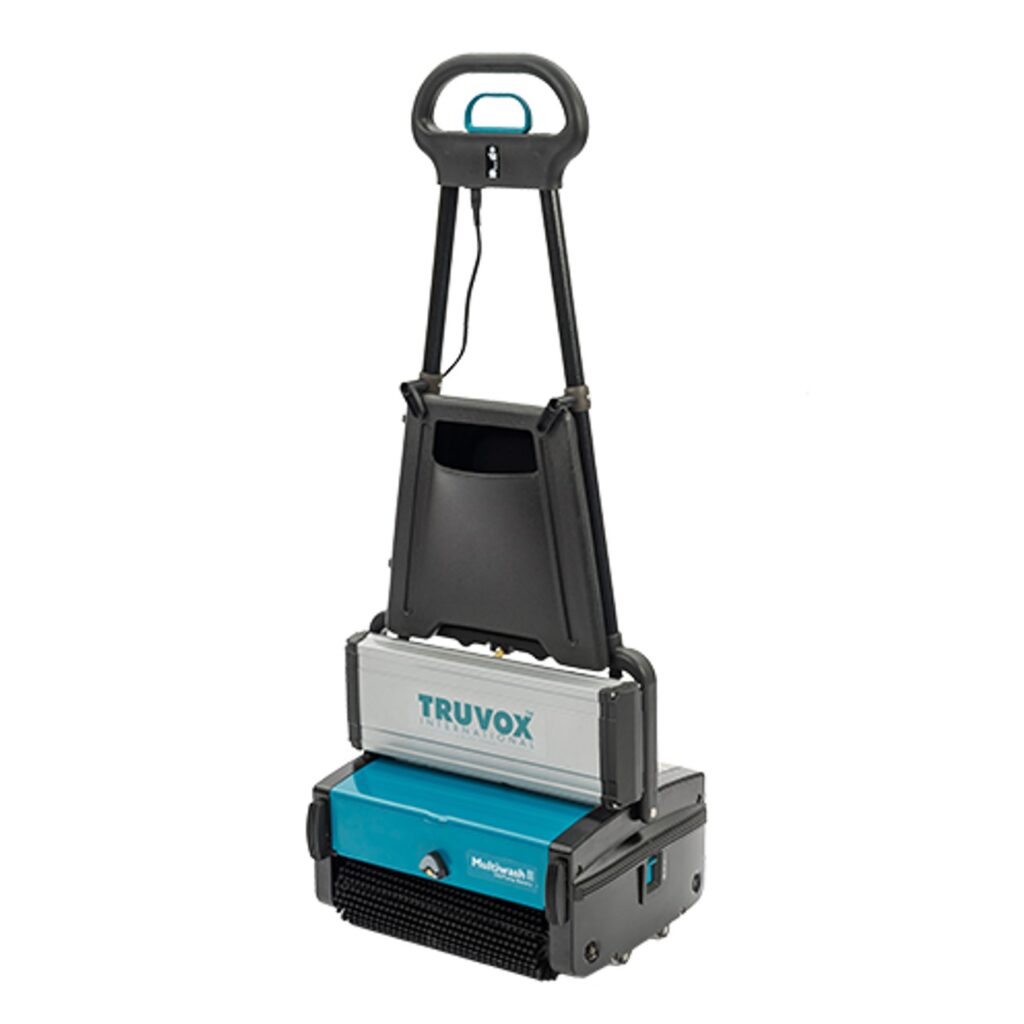
Truvox Multiwash 240
From £44.64 per month
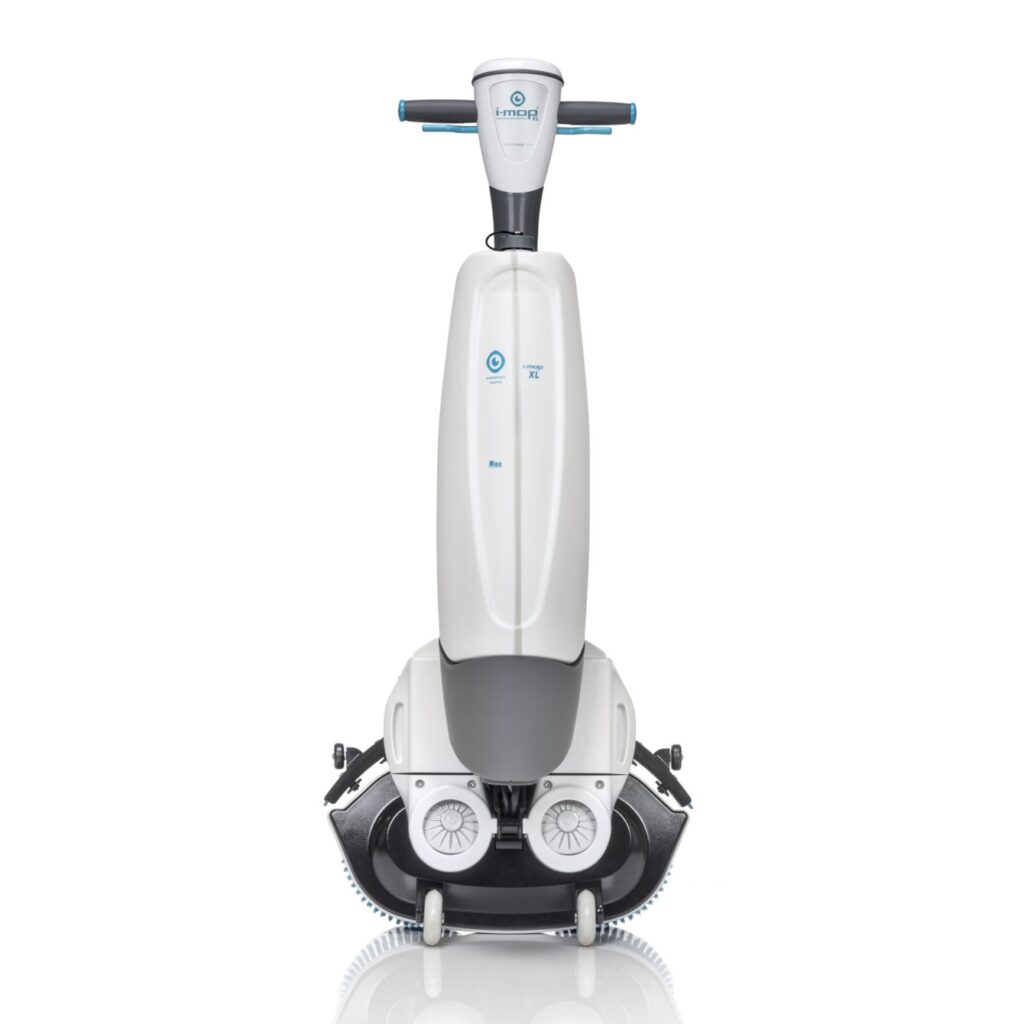
iMop XL Scrubber Dryer
From £105.45 per month
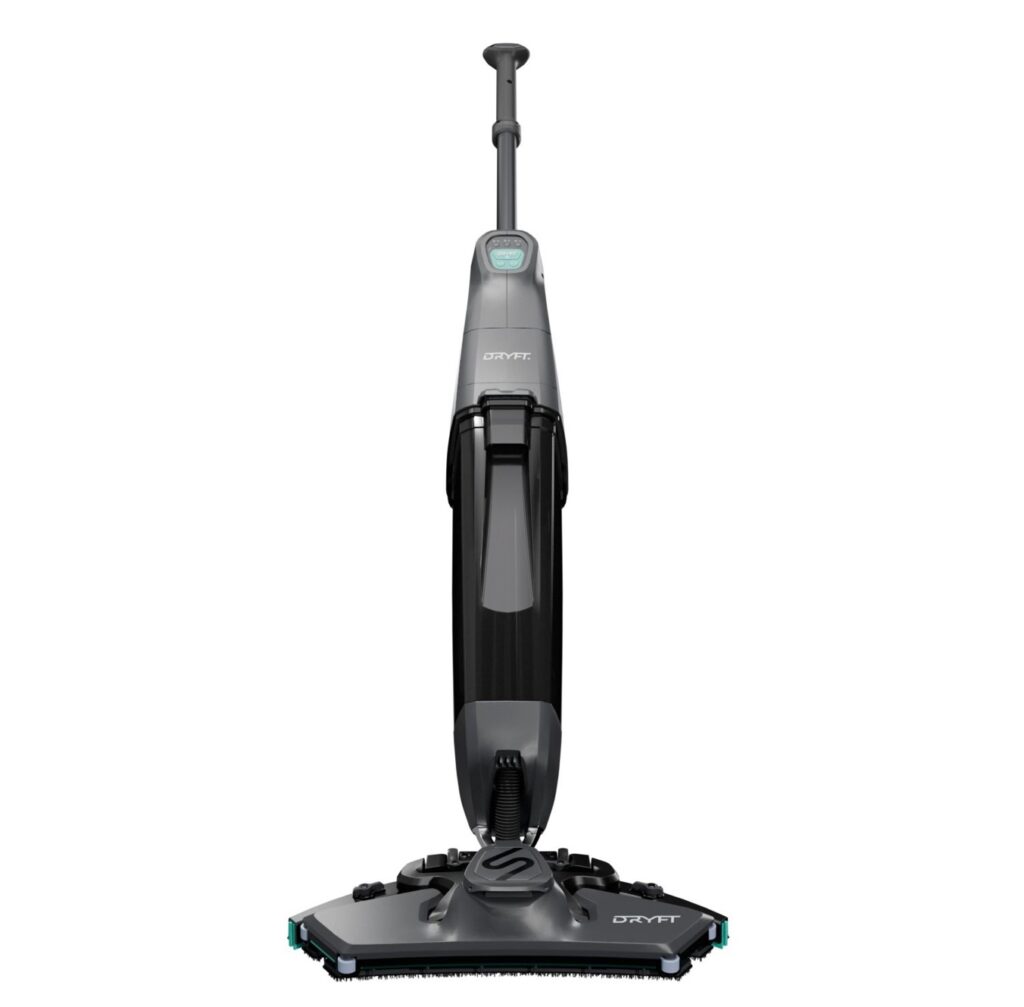
DRYFT Scrubber Dryer
From £46.87 per month

EcoGum Maxi Gum Remover
From £90.58 per month
Restore Advanced Fibre and Fabric Systems
Implement Professional Deep-Fibre Restoration
Advanced sustainable technology in carpet care focuses on deep-fibre restoration rather than just surface-level appearance. By combining high-powered extraction hardware like the Truvox Hydromist series with advanced liquid chemistry from Njord or Prochem, contractors can achieve superior results. This approach removes embedded dirt and allergens, extending the life of the carpet and improving indoor air quality.
Using pH-neutral, WoolSafe-approved pre-sprays ensures that sensitive fibres are protected during the cleaning process. Njord Chemicals, for instance, provides next-generation formulations that target stubborn stains without leaving sticky residues that attract new dirt. This “Fibre Deep” restoration is essential for maintaining the professional appearance of commercial offices and hotels.
Deploy Specialist Chemistry for Challenging Soils
In high-traffic commercial environments, heavy-duty alkaline cleaners like Prochem Trafficlean are required to break down greasy soils. Sustainable technology in this sector also includes molecular deodorisers like Invader, which disassembles urine salts on contact to eliminate permanent odours. This specialist chemistry ensures that even the most challenging contamination is handled effectively without damaging the underlying material.
Machinery such as the Cimex Cyclone uses a unique triple-brush system for deep agitation on various flooring types, including resilient vinyl and natural stone. This mechanical action reduces the reliance on harsh solvents, making the cleaning process safer for the operator and the environment. Choosing the right combination of agitation and chemistry is the key to professional restoration success.
Did You Know?
To meet the UK-adopted BS EN 13432 standard for compostability, a product must break down into water, CO2, and biomass in industrial facilities within 180 days, leaving zero toxic residues behind.
Conclusion
The adoption of sustainable technology is a critical evolution for any UK business seeking to balance high hygiene standards with fiscal responsibility. By integrating precision machinery like the i-mop with water-soluble chemical systems, companies can achieve a 60% reduction in spend while significantly lowering their environmental footprint. The transition away from traditional, wasteful methods is no longer a choice but a commercial necessity in a competitive market.
As we move toward a green future UK, the emphasis will remain on efficiency, compliance, and capital preservation. Whether through tax-efficient leasing or the implementation of chemical-free sanitisation, the tools available today provide a clear path to a more sustainable and profitable operation. Now is the time to audit your current hygiene processes and embrace the innovations that will define the next decade of professional cleaning.
sustainable technology, cleaning innovation
cleaning innovation, sustainable technology
sustainable technology, cleaning innovation
cleaning innovation, sustainable technology
Frequently Asked Questions
A:
Sustainable systems reduce costs primarily through the use of concentrated chemicals and high-efficiency machinery. For example, water-soluble sachets eliminate the high cost of shipping water and reduce chemical waste by 60% through precise dosing. High-performance machines like the i-mop also reduce labour costs by cleaning up to 75% faster than traditional methods.
Concentrated systems also save on storage and transport, as a small box of sachets can replace an entire pallet of traditional 5L bottles, freeing up valuable commercial floor space.
A:
EN 14476 is a rigorous European standard adopted in the UK that proves a disinfectant is effective against enveloped viruses. Using products with this certification, such as SoluCLEAN Anti-Viral Cleaner, ensures that your facility is meeting the highest standards for infection control, which is essential for CQC compliance in healthcare and OFSTED standards in schools.
These cleaners are independently tested to eliminate 99.99% of viruses, providing a scientifically backed hygiene barrier for staff and visitors.
A:
Leasing is often preferred by SMEs as it preserves working capital and provides significant tax advantages, as monthly payments are typically 100% tax-deductible. It also protects against technology obsolescence, allowing businesses to upgrade to the latest, most efficient machinery at the end of the lease term without another large capital outlay.
Fixed monthly costs also make budgeting more predictable, protecting the business against inflation and unexpected equipment replacement costs.
A:
The "Simpler Recycling" reforms mandate the segregation of food waste. EN 13432 certified compostable liners ensure that businesses can participate in these recycling schemes without contaminating the waste stream. These liners break down completely within 180 days in industrial composting facilities, supporting circular economy goals and ensuring legal compliance.
Using certified liners also provides the necessary evidence for environmental audits and helps businesses meet their legal Duty of Care regarding waste disposal.
A:
Yes, technologies like Tersano iClean transform tap water into Stabilised Aqueous Ozone, which is 50% stronger than bleach and kills 99.999% of bacteria. SAO is a highly effective sanitiser that leaves no toxic residue or fumes, making it safer for both the environment and the people using the space.
It is increasingly used in high-velocity environments like hospitals and kitchens where maintaining a chemical-free, food-safe, and non-toxic atmosphere is a priority.