
Chesterfield Janitorial Supplies: Open a Trade Account
Commercial facilities teams across Derbyshire require dependable access to high-grade chemicals, cleaning hardware, and reliable machinery. Sourcing Chesterfield janitorial supplies through dedicated trade channels eliminates regional supply bottlenecks, inflated retail markups, and inconsistent product specifications. By focusing on commercial durability and proven formulations, facility managers can optimise their daily maintenance routines. Consistent access to industrial stock ensures operational efficiency across local schools, healthcare premises, workshops, and manufacturing sites throughout the wider region.
Managing cashflow whilst keeping essential consumables fully stocked remains a significant operational challenge for regional maintenance teams. Traditional trade outlets often introduce friction through restrictive spending thresholds or cumbersome card payments for replenishment orders. How can local contractors streamline commercial purchasing, secure competitive wholesale terms, and access modern machinery without risking working capital?
Key Takeaways
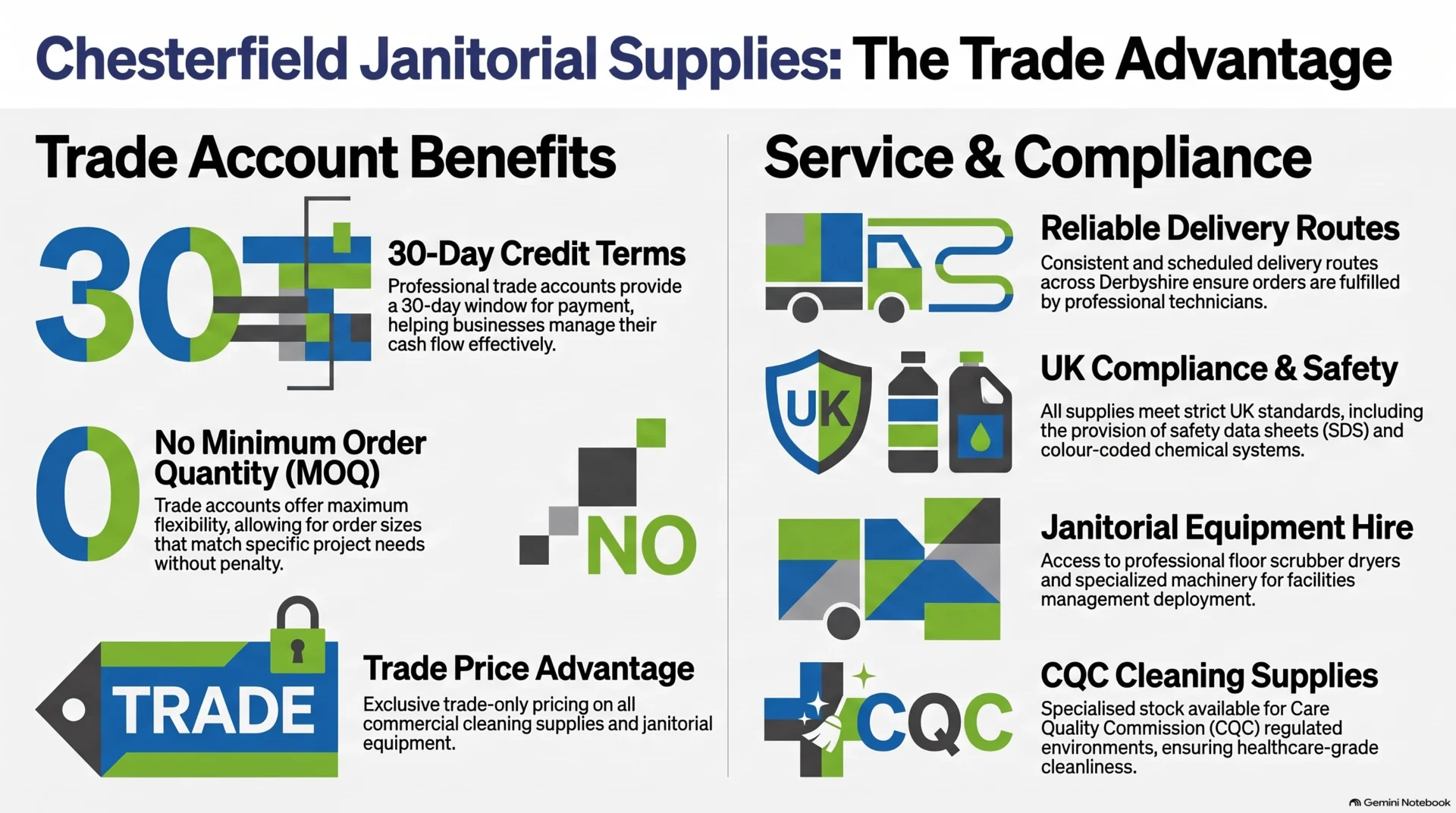
- Opening a dedicated 30-day trade account provides consolidated monthly invoicing, eliminating repetitive transaction fees and simplifying administrative workflows for regional facilities maintenance contractors.
- Sourcing through a trade account with no MOQ enables small commercial operators to procure single units of industrial chemicals at standard wholesale rates.
- A continuous daily price-check guarantee against UK wholesale benchmarks prevents seasonal cost spikes on essential cleaning consumables, paper products, and personal protective equipment.
- Structured equipment acquisition pathways allow organisations to deploy commercial scrubber dryers via tax-deductible leasing agreements, preserving capital reserves for day-to-day business operations.
- Adopting colour-coded hardware alongside EN 14476 certified virucidal formulations ensures complete regulatory compliance across regulated healthcare premises, educational settings, and commercial catering kitchens.
Commercial Supply and Procurement Comparison
Trade procurement channels provide clear operational advantages over retail purchasing for commercial cleaning contractors. Consolidating consumable orders under structured trade accounts reduces unit overheads and improves regulatory compliance. Furthermore, direct trade access simplifies the acquisition of professional floor cleaning machinery. The comparative data below outlines the primary differences between wholesale trade channels and fragmented cash purchasing.
Reviewing commercial terms across credit access, order flexibility, and delivery networks helps facilities directors make informed choices. Standardising inventory across sites prevents costly operational downtime. Cleaning operatives work more efficiently with certified products that meet statutory audit requirements across the United Kingdom.
| Procurement Model | Order Restrictions | Cashflow Impact | Regulatory Documentation |
|---|---|---|---|
| Standard Trade Account | No minimum order value | 30-day net payment terms | Full COSHH and technical data sheets supplied |
| Card-on-Order Retail | Variable retailer thresholds | Immediate capital outflow | Inconsistent or missing compliance certificates |
| Bulk Pallet Wholesale | High minimum quantities | Tied working capital | Bulk sheets requiring manual record tracking |
| Equipment Lease Finance | Asset value dependent | Fixed monthly operating expense | Full statutory manufacturer warranty included |
Trade Accounts Versus Upfront Cash Purchases
Cashflow Efficiency with Consolidated Invoicing
Operating with a dedicated 30-day trade account transforms how facilities teams handle consumable expenses. Rather than reconciling multiple card transactions for routine purchases, contractors receive a consolidated monthly invoice. This operational structure preserves vital working capital. It simplifies internal bookkeeping and gives cleaning businesses complete visibility over recurring facility running costs.
Consider a commercial contractor managing eight separate cleaning sites across the district. Processing individual card payments every week creates administrative friction and fragments financial records. A consolidated trade facility groups these transactions into a single monthly settlement. Finance teams can reconcile costs against specific site budgets without sorting through dozens of digital receipts. Standard 30-day terms allow contractors to deliver client services and collect client revenues before settling their supplier accounts.
Trade Account Onboarding and Priority Service
Applying for commercial credit requires straightforward business verification without complex administrative barriers. Applicants supply standard company registration details, VAT numbers where applicable, and trade references. Commercial accounts open quickly. This enables immediate purchasing without arbitrary order constraints. Account holders receive dedicated customer support channels alongside priority order processing on high-demand stock lines.
Some contractors assume that trade credit facilities require substantial annual spending commitments. In practice, accessible credit limits support contracting enterprises of all sizes. Account holders gain direct access to trade specialists who understand chemical dilution rates and equipment specifications. Furthermore, trade clients receive priority allocation during national supply shortages. This operational buffer ensures that essential janitorial supplies remain consistently available on site.
Daily Price Verification and Wholesale Benchmarks
Operational Mechanics of Daily Price Checking
Systematic daily price checks ensure that contractors access genuine trade price cleaning supplies without paying inflated distributor markups. Commercial teams actively monitor national wholesale rates across core chemical lines, paper systems, and PPE. This disciplined benchmarking guarantees that published prices remain competitive against major UK suppliers on equivalent professional-grade formulations.
Wholesale janitorial pricing often fluctuates based on raw material costs and distributor margins. Hygieia operates an active price-monitoring protocol across all stocked sale lines. If a trade buyer discovers an identical product offered cheaper by a verified UK distributor, our team responds within one working day. This price-check guarantee excludes discontinued lines and clearance items. By maintaining price parity with national benchmarks, facilities managers avoid paying seasonal markups on routine replenishment orders.
Common Consumable Categories Prone to Overpricing
High-volume consumables represent the largest area of hidden distributor markups within the janitorial sector. Bulk washroom paper, five-litre concentrate drums, and disposable nitrile gloves frequently carry inflated prices across mainstream trade outlets. Transparent trade pricing safeguards maintenance budgets by establishing consistent, predictable margins across these essential repeat purchases.
Third-party online marketplaces often list cleaning supplies at seemingly low entry rates. However, these listings frequently conceal compromised specifications. Common issues include lower-weight paper rolls, short-expiry chemicals, or uncertified PPE. Substandard chemicals often lack mandatory UK safety data sheets, breaching COSHH regulations. Genuine wholesale pricing protects facilities teams from these hidden operational risks. Reliable bulk supplies deliver verified dilution ratios, certified virucidal activity, and robust commercial packaging.
Regional Fulfilment and Collection Channels
Coordinated Route Delivery Schedules
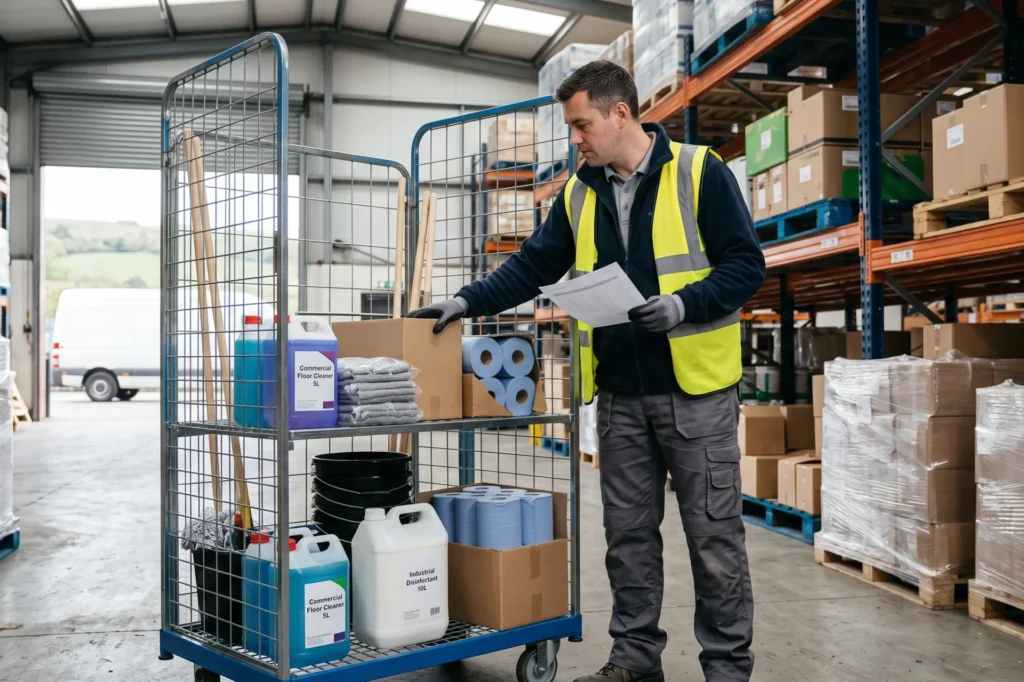
Reliable logistics networks ensure that contract cleaners and facility maintenance teams receive critical hygiene supplies without unnecessary downtime. Structured delivery schedules combine regional fleet vehicles with national courier partnerships. Orders placed before the two o’clock afternoon cut-off receive rapid processing, allowing teams to maintain uninterrupted operations across scheduled cleaning contracts.
Different product profiles require distinct transport methods. Heavy chemical consignments, bulky paper pallets, and industrial scrubbing machinery transport most efficiently via regular regional routes. These scheduled vehicle routes minimise packaging waste and reduce transit damage. Conversely, urgent replenishable lines such as replacement vacuum motors, floor pads, or specialist PPE consumables dispatch via express courier services. This dual-track logistics strategy ensures that facilities teams receive heavy industrial hardware securely whilst retaining rapid access to emergency components.
Warehouse Collection Protocols
Trade collection facilities provide a rapid alternative for contractors requiring immediate access to essential supplies. Operating from the central Selby distribution hub, trade customers can collect urgent orders by prior arrangement. Pre-booking collection slots ensures that warehouse operatives pick and stage orders in advance, eliminating counter delays for busy contractors.
The pre-arrangement protocol optimises warehouse workflows and respects contractor schedules. When a cleaning operative faces an unexpected site emergency, calling ahead allows the warehouse team to prepare products immediately. Customers present their purchase order number and trade identification upon arrival for seamless collection. Regional collection options offer additional logistical flexibility, keeping commercial operations moving without waiting for standard road transport schedules.
Trade Accounts
Transform your purchasing with our enterprise-grade procurement tool.
Pay By Monthly Invoice
Elimination of Minimum Order Quantities
Capital Protection for Smaller Contractors
Securing a trade account with no MOQ allows independent operators to purchase professional supplies at trade rates without ordering full pallets. Many distributors impose order thresholds of several hundred pounds, forcing small firms into cash-draining stockholding. Removing order minimums ensures equitable access to professional chemicals for businesses of every size.
Smaller cleaning businesses face significant barriers when forced to meet arbitrary wholesale thresholds. Tying up working capital in excessive inventory restricts funds needed for payroll, fuel, and equipment maintenance. Under a zero-threshold model, a contractor can purchase a single five-litre container of floor degreaser at trade rates. They can also buy a single box of nitrile gloves without penalty. This purchasing freedom enables smaller operators to deliver professional cleaning results using commercial-grade chemicals, competing effectively against larger competitors.
Operational Risks of Artificial Order Inflation
Distributor minimum order values encourage artificial cart padding, where buyers purchase unnecessary items simply to reach checkout thresholds. This practice inflates immediate procurement costs and leads to cluttered storage cupboards containing slow-moving products. Removing minimum order rules enables precise, demand-led purchasing that keeps operational overheads strictly aligned with real contract requirements.
When facilities managers add random consumables to avoid penalty fees, they tie up capital in dead stock. Chemicals can exceed their recommended shelf lives. Dispensers gather dust in store cupboards. Excess stock may also violate local fire safety guidelines. Whilst high-volume bulk orders remain economical for large operations, zero-threshold flexibility accommodates reactive requirements. Contractors can order exact quantities for specific short-term jobs, maintaining clean balance sheets and orderly supply stores.
Equipment Acquisition
Buy Outright
Full warranty, immediate ownership
Acquire market-leading commercial machinery outright, with full manufacturer warranty and direct delivery from our Selby HQ to site.
Lease Finance
Tax-efficient lease from £24 pcm
Spread the cost over 2, 3 or 5 years with no-deposit leasing on machines over £1,000, plus same-day approval and 7-day UK delivery.
Short-Term Hire
Cover breakdowns and one-off jobs
Hire professional scrubber dryers, carpet extractors and steam cleaners from our Selby HQ for emergency cover or one-off project work.
Machinery Acquisition Models for Commercial Facilities
Capital Purchase Versus Tax-Efficient Leasing
Selecting the appropriate acquisition route for floor maintenance equipment directly influences balance sheet liquidity and tax liability. Whilst cash purchases suit lower-cost machines, leasing high-performance scrubber dryers spreads capital expenditure over flexible multi-year agreements. Lease payments are typically fully deductible as operating expenses, preserving valuable reserves for day-to-day facilities management.
Modern floor maintenance hardware, such as the compact i-mop XL, significantly increases cleaning speed compared to manual mopping. However, buying an advanced scrubber dryer outright requires considerable capital expenditure. Through structured equipment leasing, a commercial machine translates into predictable monthly payments from as low as twenty-four pounds per month. This approach matches equipment costs directly to monthly contract billing. Furthermore, leasing agreements allow facilities teams to upgrade to modern machinery at term completion, avoiding ageing assets.
Short-Term Equipment Hire Applications
Short-term equipment hire provides an economical solution for periodic deep cleans, unexpected equipment breakdowns, or specialist site trials. Instead of purchasing specialised machinery for occasional use, contractors can hire carpet extractors or rotary scrubbers for specific projects. This approach minimises capital exposure whilst ensuring access to industrial-grade cleaning performance.
Commercial facilities regularly encounter non-routine cleaning requirements that standard maintenance equipment cannot handle. Periodic carpet restoration, post-construction floor scrubbing, and emergency extraction after pipe leaks require specialist machinery. Hiring units like the Truvox Hydromist carpet extractor or MotorScrubber JET3 allows contractors to complete tasks efficiently without long-term ownership costs. Short-term hire also provides an opportunity to evaluate machine ergonomics and battery runtime before committing to a commercial lease.
Price-Checked Deals
Stock up on our fast-moving wholesale cleaning products today. We constantly monitor these price-checked deals to lower your commercial overheads..
Statutory Compliance and Regulatory Infection Control
EN 14476 Antiviral Efficacy and CQC Regulation 15
Healthcare premises and care facilities must satisfy strict Care Quality Commission standards regarding cleanliness and infection control. Regulation 15 mandates that environments remain clean and properly maintained. Using disinfectants certified to EN 14476 standards proves virucidal efficacy against major pathogens. This provides the verifiable audit documentation required during formal clinical inspections.
CQC inspectors assess the cleaning chemistry used within a facility, not just visible surface cleanliness. Standard retail disinfectants often lack independently validated virucidal testing against resilient viruses. Professional formulations such as SoluCLEAN Anti-Viral Cleaner satisfy EN 14476 standards in a single step, destroying 99.99% of viruses. Facilities teams must retain safety data sheets and documented cleaning logs. These records demonstrate that chosen disinfectants meet recognised British and European benchmarks. Maintaining clear technical files ensures compliance during regulatory reviews.
Colour-Coded Protocols and Cross-Contamination Prevention
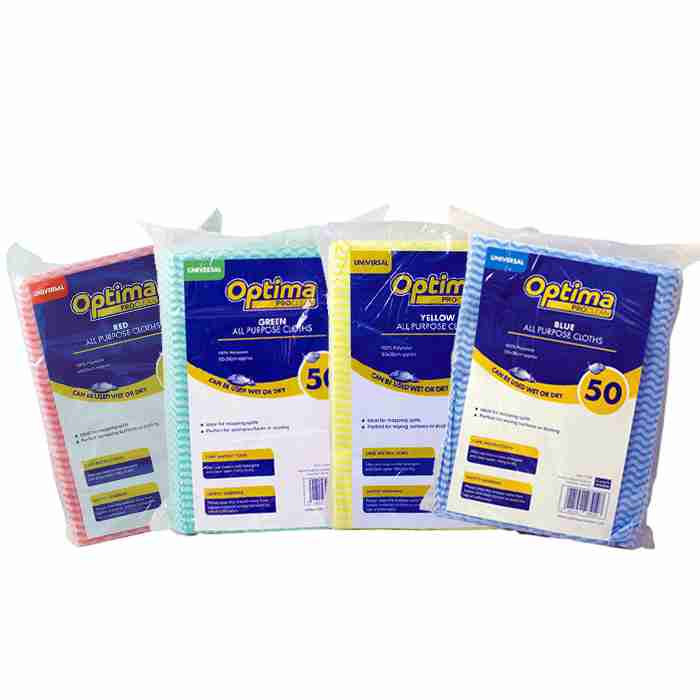
Adopting a strict four-colour janitorial system prevents cross-contamination between high-risk sanitary areas and general premises. Following BICSc guidance, colour coding assigns red to washrooms and green to food preparation areas. Blue covers general office surfaces, whilst yellow serves clinical zones. This visual protocol protects public health across busy environments.
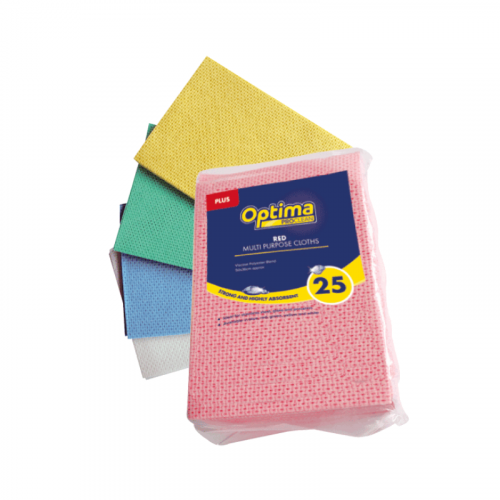
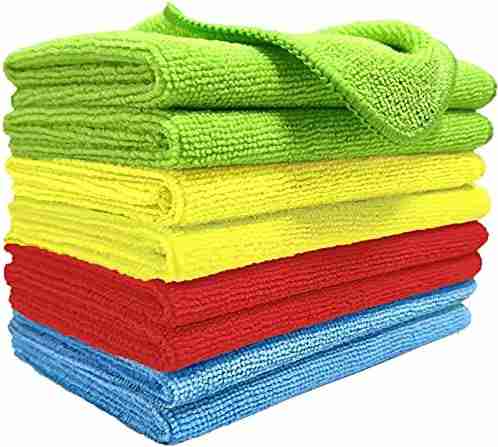
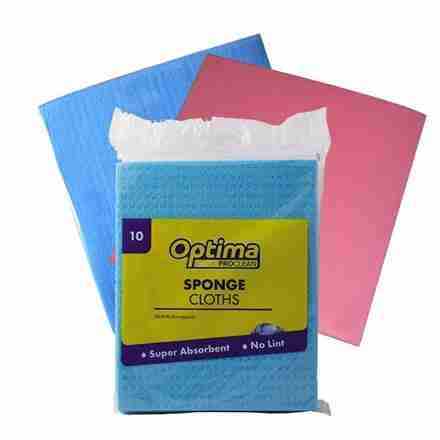
Cross-contamination represents a primary compliance failure during environmental health and hygiene audits. Using the same cleaning cloths or mop heads across washrooms and food preparation areas spreads pathogenic bacteria rapidly. Hygieia provides colour-coded hardware, including microfibre cloths, mop buckets, and labelled spray bottles. These tools allow cleaning operatives to adhere to zonal hygiene immediately. Pre-labelled bottles also ensure that staff do not mix chemical solutions, protecting floor finishes and maintaining safety across clinical and commercial settings.
Built for Your Industry
Hygieia provides products and equipment into the three key UK sectors where cleaning standards run highest. Each card links to that sector’s compliance detail, recommended machines, and live case studies.
Facilities Management
Multi-site contractor support nationwide
Single rolling lease contract across all your customer sites. Replace machines as contracts win or lapse – no capital tied up.
Education & Schools
Safe corridors, term-time delivery slots
Quiet, slip-prevention scrubbers for corridors and halls. Term-time delivery slots designed not to disrupt teaching.
Healthcare & NHS
EN 14476 viral compliance for CQC sites
EN 14476-compliant chemistry and machines that meet Regulation 15 of the CQC cleanliness standards across NHS and care sites.
Waste Management and Environmental Mandates
Industrial Compostability and the EN 13432 Standard
Commercial sustainability goals require verifiable certifications rather than vague environmental claims. The EN 13432 standard certifies that compostable liners disintegrate completely within industrial composting facilities within 180 days. Using certified liners ensures that organic waste streams remain free from non-degradable microplastics. This enables full participation in municipal recycling schemes.
Facilities managers face increasing scrutiny over the environmental footprint of their operations. Non-certified plastic liners frequently contaminate commercial organic waste collections, resulting in rejected loads and heavy disposal surcharges. Hygieia supplies compostable waste sacks manufactured from plant extracts that meet strict BS EN 13432 disintegration criteria. Under controlled industrial composting conditions, these liners break down into water, biomass, and carbon dioxide without toxic residues. Using certified compostable sacks demonstrates environmental stewardship during commercial contract tenders.
Simpler Recycling Reforms and Commercial Duty of Care
UK statutory recycling reforms mandate that commercial premises segregate dry recyclables and food waste from general rubbish streams. Businesses carry a legal duty of care under environmental protection legislation to manage waste responsibly. Correctly categorised, heavy-duty refuse sacks ensure smooth compliance with mandatory waste separation and tracking rules.
Simpler Recycling regulations place strict obligations on businesses to separate paper, cardboard, plastic, metal, and food waste. Failing to segregate waste streams properly can lead to local authority enforcement action and increased disposal fees. Providing clearly designated, high-tensile sacks prevents split bags and site contamination. Furthermore, commercial enterprises must retain accurate waste transfer notes for at least two years to evidence compliant disposal through licensed carriers. Standardising heavy-duty sacks across facilities ensures robust containment and regulatory alignment.
Get a Trade Quote
Final Thoughts
Selecting professional Chesterfield janitorial supplies through an established trade supplier delivers significant commercial, operational, and regulatory benefits. By moving away from fragmented retail buying and costly minimum order policies, regional cleaning contractors safeguard cashflow through structured 30-day accounts. Reliable wholesale access ensures that sites remain stocked with certified virucidal chemicals and colour-coded hardware. These dependable consumables meet demanding commercial standards day after day.
Regulatory scrutiny across infection control and commercial waste management continues to expand. Working with a knowledgeable supply partner provides an essential operational advantage. Deploying modern floor care technology, verified sustainable chemistry, and compliant waste segregation systems positions facilities teams to meet statutory expectations efficiently. Professional janitorial procurement provides the solid foundation required for reliable, hygienic, and cost-effective commercial facility maintenance.
Frequently Asked Questions
Q: How does a trade account improve operational cashflow for local cleaning contractors?
A: Opening a commercial trade account provides thirty-day credit terms and consolidated monthly billing. Instead of making individual debit card payments for every replenishment order, contractors group their purchases into a single invoice. This frees up working capital, enabling cleaning businesses to cover payroll and routine operating expenses whilst awaiting payment from clients. Centralised invoicing also reduces card transaction charges and simplifies bookkeeping for internal finance teams. Predictable monthly credit terms help regional facilities contractors manage recurring consumable budgets across multiple commercial client sites with complete financial control.
Q: Why is the absence of a minimum order quantity beneficial for small facilities?
A: Traditional wholesale suppliers often enforce minimum spending limits between one hundred and five hundred pounds per order. Sourcing through a supplier with no minimum order requirements allows contractors to buy single containers or glove boxes at trade rates. This removes the financial burden of tying up capital in unwanted surplus stock. It prevents overcrowded janitorial cupboards and stops buyers adding unnecessary filler products to reach arbitrary checkout values on routine orders.
Q: What specific standards must healthcare cleaning chemicals meet for CQC audits?
A: Healthcare and adult social care environments must comply with Care Quality Commission Regulation 15 regarding cleanliness and infection prevention. Cleaning chemicals used in clinical or patient-facing areas must hold independent laboratory verification under the EN 14476 European standard for virucidal activity. This certification proves efficacy against serious pathogens including Norovirus, Influenza, and Coronavirus. Facilities must also retain up-to-date COSHH safety data sheets and documented staff dilution logs. These records substantiate cleaning protocols during formal inspector audits and confirm full regulatory compliance.
Q: How does equipment leasing compare financially with purchasing machines outright?
A: Purchasing industrial cleaning machinery outright demands immediate capital expenditure, reducing cash available for daily operational needs. In contrast, equipment leasing spreads the machinery investment across manageable two, three, or five-year terms with fixed monthly instalments. These lease payments are typically fully tax-deductible as business operating expenses, delivering valuable fiscal efficiency. Leasing also protects facilities teams from asset depreciation and technical obsolescence. It allows contractors to upgrade to modern, efficient floor scrubbers whenever their contract terms expire without large capital outlays.
Q: How does the colour-coded cleaning system reduce cross-contamination risks?
A: The British Institute of Cleaning Science colour-coding framework segregates maintenance equipment into four distinct colour groups to isolate bacteria. Red equipment serves high-risk sanitary areas such as toilets and urinals, whilst yellow handles washroom surfaces like sinks and tiles. Green equipment is reserved exclusively for commercial food preparation areas. Blue equipment covers general low-risk office spaces. Strict adherence to this colour protocol prevents operatives from transferring harmful microbes between washrooms, kitchens, and communal working zones. This ensures consistent hygiene across commercial facilities.